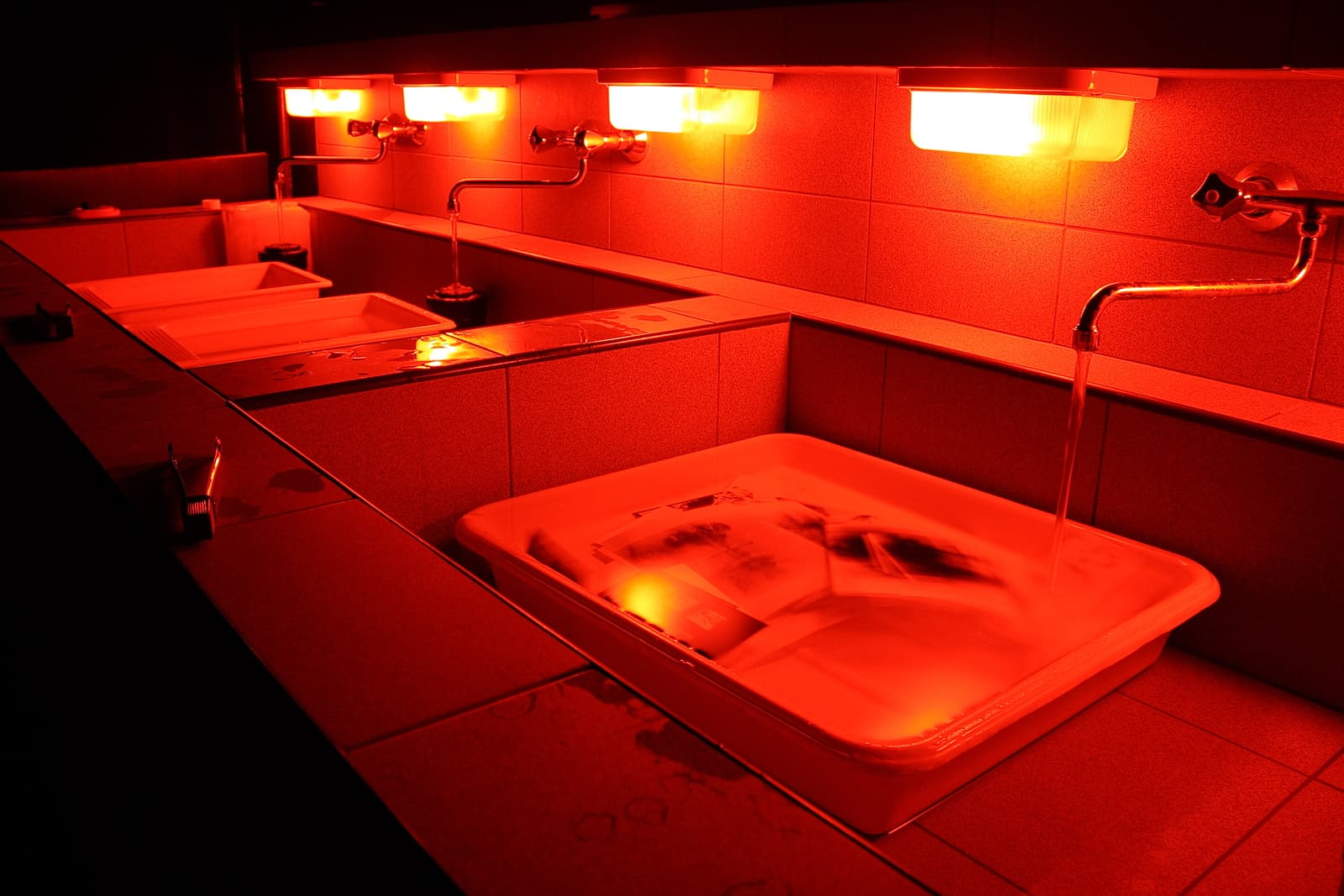
A dark room light is a specialist light source designed to provide controlled illumination in environments where conventional lighting could interfere with light-sensitive materials or processes.
While traditionally associated with photographic darkrooms, specialist low-level or coloured lighting can have applications across photography, manufacturing, laboratories and other technical environments.
How does a dark room light work?
Traditional photographic darkrooms use a safelight, which produces illumination at a wavelength that does not expose certain photographic materials. This allows photographers to see what they are doing while working with photographic paper and film.
The exact type of dark room light required depends on the materials being handled. Using the wrong light can expose or damage light-sensitive materials, so the appropriate lamp and filter should always be selected for the specific application.
Where are dark room lights used?
Photography is the best-known application. Dark room lighting allows photographers to work safely when developing traditional photographic prints and film.
Specialist controlled lighting can also be useful in other environments where normal illumination needs to be minimised or carefully managed. Depending on the application, this can include laboratories, testing environments, production facilities and technical work areas.
Are LED dark room lights available?
Modern LED lighting can provide an alternative to older specialist lamps. LEDs are available in different colours and specifications, allowing businesses to select lighting according to their particular requirements.
LED systems can also offer advantages such as low energy consumption, long operating life and reduced maintenance, making them suitable for commercial and specialist installations.
Choosing the right dark room light
The right dark room light depends on what you are using it for. Consider the materials or processes involved, the required colour or wavelength, brightness and the size of the working area.
For specialist applications, it is important to check the manufacturer’s specifications rather than assuming that any red or low-level light will be suitable.
Choosing the correct lighting can help protect sensitive materials while still providing enough visibility for safe and effective work.