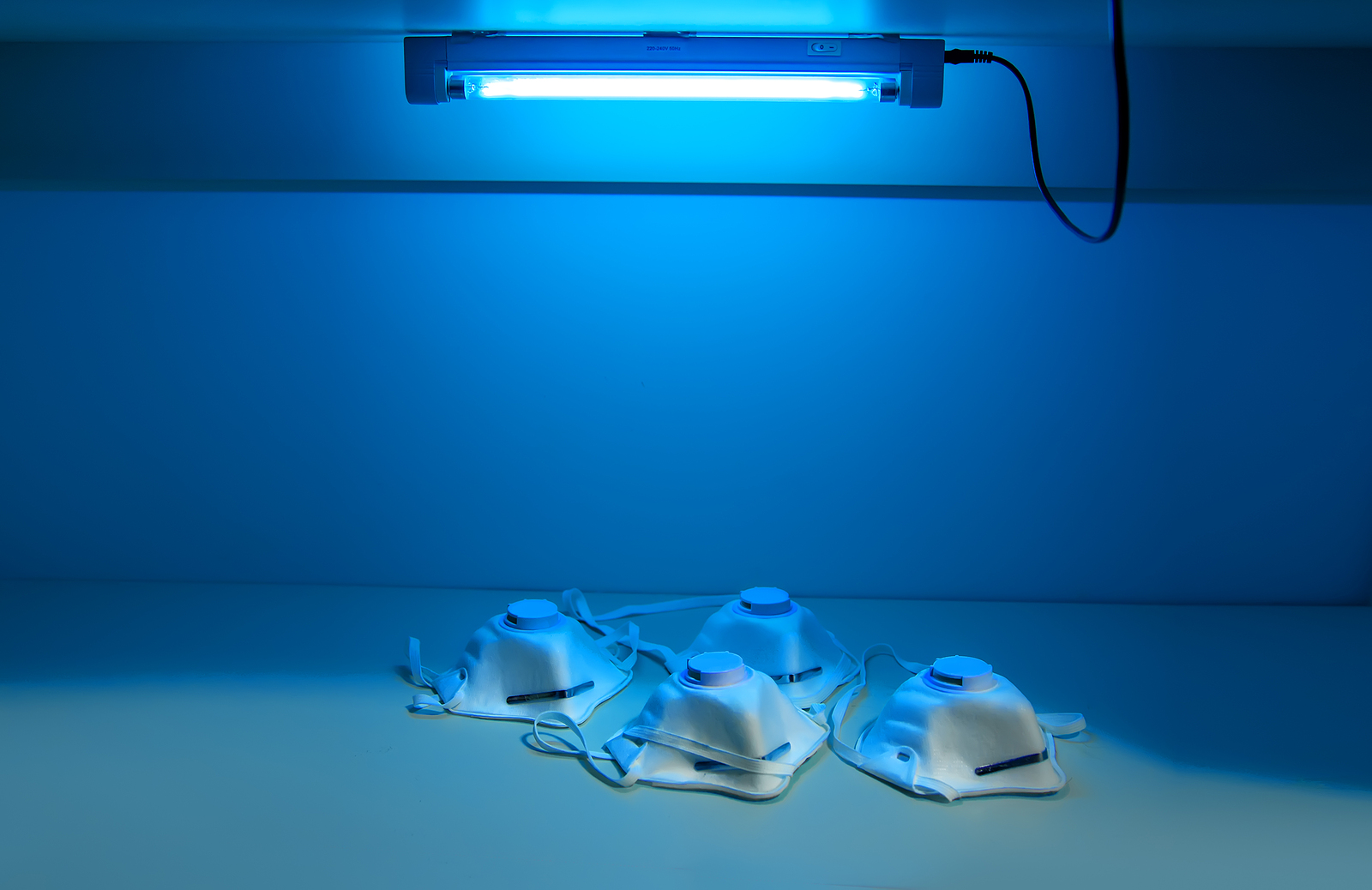
It is difficult to overstate the power of ultraviolet radiation to help keep people safe, and a dedicated steriliser lamp is an ideal way to keep surfaces, surgical utensils and touchscreen devices safe and free from disease.
They work due to the power of UV radiation, which has the potential to kill airborne bacteria and viruses when they are exposed to UV light, whilst also keeping people safe and unharmed.
This process, known as ultraviolet germicidal irradiation (UVGI), was initially discovered in 1878, although it took several decades for it to be applied.
The initial step was made by Arthur Downes and Thomas Blunt, who discovered that sunlight stopped bacteria and viruses from growing.
Whilst some people had believed that the sun had healing properties, Mr Downes and Mr Blunt were the first to find a reason why this might be the case.
This effect was confirmed by Emile Declaux and Robert Koch, and in 1892, it was confirmed that the UV part of sunlight, specifically UV-C, gave it germicidal properties.
However, whilst these made for effective theories, it would take a couple of decades for steriliser lights to be practically applied.
The first of these was a water treatment plant in Marseilles; instead of other forms of filtration, such as desalination or sand filtration, UV light was applied. However, whilst the concept worked, the plant was unreliable and eventually saw itself shut down.
It would take until the 1930s for UVGI to be used to disinfect the air and have the potential to disinfect surfaces. This was thanks to the pioneering work of William Wells, who first found that UV lights could kill airborne pathogens.
This led to the development of UV light barriers for a children’s hospital in Boston, Massachusetts, as well as the publishing of a book that has become a definitive resource in the field of air hygiene.