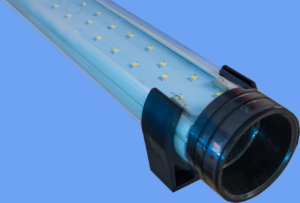
Many public toilets and washrooms in hospitality venues will often have a remarkably blue hue, which is not a choice made to maintain the ambience of a dark nightclub but instead is a lighting choice intended to stop drug use.
Blue lights are affordable, far from unpleasant and can provide an interesting look, particularly in many modern, mirrored and tiled washrooms, but they can also help to stop drug use.
Specifically, they can help to stop the use of recreational drugs taken using needles or syringes, which often need to be very carefully dosed and injected into specific places in the body.
Most of the time, drug users will inject into superficial veins, which are the blood vessels closest to the skin on the wrist, arms, hands and legs.
Veins tend to be blue for complex reasons relating to how the skin absorbs red light and reflects blue light, a phenomenon which is most visible under red, infrared or white light.
By opting for blue lights instead, veins become much harder to see, which makes it harder to find a vein to inject, can make it harder to use equipment such as needles and usually discourages drug users from taking the risk.
This either stops them from using entirely or leads them to go somewhere else to use.
This prevents a lot of the issues that come with needle drug use, such as unclean facilities, public health hazards and the risks of spreading infections due to leftover needles.
They work alongside a range of other wider policy measures which ensure that recreational drug users get the support they need to reduce the risks of potential harm, such as access to needle and syringe programmes to reduce infection risk, access to naloxone in the case of overdoses and safe treatment programmes to guide drug users away from dependence.